
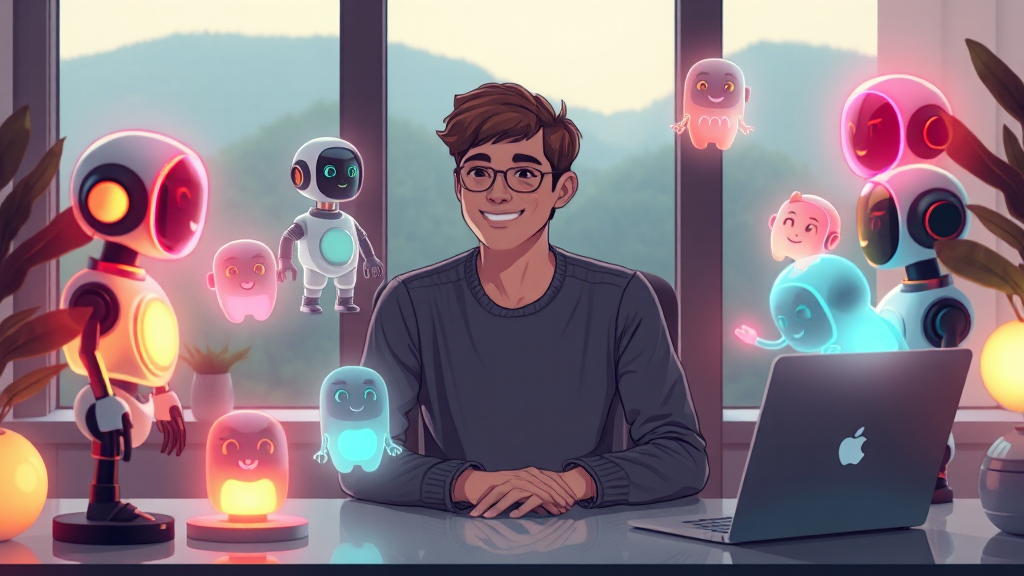
Chat With AI Characters: How Virtual Companions Are Reshaping Digital Conversation
Conversation has always been one of the most human things we do. We talk to friends, family, colleagues, and even strangers to exchange ideas, share feelings, and pass the time. In the last few years, a new kind of conversational partner has entered the picture: the AI character. Instead of chatting with a generic assistant that only answers questions, millions of people now choose to chat with AI characters that have names, personalities, backstories, and moods. These virtual companions are not just a technical curiosity; they are becoming a genuine part of how people experience entertainment, companionship, and creative storytelling online.
This article explores what AI characters are, why they have become so popular, how they differ from ordinary chatbots, and what to keep in mind if you decide to try one yourself. Whether you are curious about the technology, looking for a creative outlet, or simply want to understand a trend that is sweeping the internet, this guide will give you a clear and practical overview.
What Exactly Is an AI Character?
An AI character is a conversational agent built on top of a large language model and then shaped with a specific persona. That persona usually includes a name, an appearance, a personality type, a speaking style, interests, and sometimes a detailed fictional history. When you interact with such a character, the underlying model does not just retrieve facts; it improvises dialogue that fits the character’s voice and emotional tone.
The key difference between an AI character and a standard virtual assistant is intent. A virtual assistant is designed to be efficient, neutral, and task-oriented. An AI character is designed to be expressive, consistent, and engaging. It may flirt, joke, comfort, argue, or tell stories. It may remember details you share and weave them into future replies. In many platforms, users can also create their own characters from scratch, choosing everything from personality traits to greeting messages. This blend of artificial intelligence and character design is what makes the experience feel less like using software and more like talking to someone.
Why People Are Drawn to Virtual Companions
The rise of AI characters is not accidental. It responds to several real needs that traditional social media and messaging apps do not fully address.
Low-pressure social interaction. For people who feel anxious about social situations, an AI character offers a judgment-free space to practice conversation. There is no fear of awkward silences, no risk of being ghosted, and no pressure to perform. You can start a chat, pause it, and return later without explaining yourself.
Always-available companionship. Loneliness is a growing concern in many parts of the world, and not everyone has someone to talk to at 2 a.m. An AI character is available at any hour and does not get tired of hearing about your day. For some users, this fills a gap that human relationships cannot always cover.
Creative exploration. Writers, role-players, and fans of fictional worlds use AI characters to explore scenarios that would be difficult or impossible to stage otherwise. You can talk to a medieval knight, a space explorer, or a pop star without leaving your room. This makes AI characters a kind of interactive storytelling tool.
Entertainment value. Many users simply find the experience fun. The novelty of a character that responds in unexpected ways keeps conversations fresh, and the variety of available personalities means there is almost always something new to try.
How AI Characters Differ From Ordinary Chatbots
It is easy to lump all conversational AI together, but the differences matter. A customer support bot, for example, is optimized for accuracy and brevity. It follows scripts, escalates to humans when needed, and avoids emotional language. An AI character does the opposite: it prioritizes immersion and emotional resonance over factual precision.
Another difference is memory. Many AI characters are designed to remember previous conversations, preferences, and story details. This continuity is what allows relationships to feel like they are developing over time. A chatbot that forgets you the moment you close the window cannot create that sense of familiarity.
Finally, AI characters are often multimodal. Some platforms let you pair text with generated images, voice, or animated avatars. This richer presentation makes the experience more vivid and helps users feel more connected to the persona they are talking to.
Popular Use Cases for AI Characters
The applications of AI characters go well beyond casual chatting. Here are some of the most common ways people use them today.
Companionship and emotional support. Users who feel isolated or stressed sometimes turn to a familiar AI character for comfort. While this is not a substitute for professional mental health care, it can provide a gentle outlet for everyday worries.
Language practice. Learners use AI characters to practice a new language in a relaxed setting. Because the character does not judge mistakes, users feel more confident trying out vocabulary and sentence structures.
Creative writing and role-play. Authors brainstorm dialogue, develop character voices, and test plot ideas by talking them through with an AI persona. Fan communities also use characters to extend their favorite fictional universes.
Entertainment and fandom. Some platforms host characters based on anime, games, or original stories. Fans enjoy interacting with versions of characters they already love or discovering new ones created by other users.
Skill building. Job interview practice, negotiation rehearsal, and public speaking preparation are all possible with a character designed to play a specific role, such as a hiring manager or a skeptical client.
What to Consider Before You Start
AI characters can be enjoyable, but they are not without considerations. Being aware of a few practical points will help you get the most out of the experience.
Privacy. Conversations with AI characters may be stored and used to improve the service. Avoid sharing sensitive personal information such as financial details, passwords, or identifying data. Read the platform’s privacy policy to understand how your data is handled.
Emotional boundaries. It is easy to form a strong attachment to a character that always responds kindly. Remind yourself that the character is a program, not a person. Enjoy the interaction, but keep a healthy separation between the virtual relationship and your real-life connections.
Content filters. Most platforms have rules about what characters can say or do. These filters exist to keep the environment safe and appropriate. If a character refuses a request, it is usually because of these guardrails rather than a personal choice.
Time management. Because AI characters are engaging by design, it is possible to lose track of time. Set limits if you notice that chatting is crowding out other activities.
The Technology Behind the Conversation
Under the hood, AI characters rely on large language models trained on vast amounts of text. These models learn patterns in language and can generate coherent, context-aware responses. Character design adds a layer on top: a system prompt or persona description that tells the model how to behave. For example, a character might be instructed to speak in a warm, playful tone, to avoid certain topics, and to reference specific memories from past chats.
Developers also use techniques such as retrieval-augmented generation to give characters access to external knowledge, and fine-tuning to align a model with a particular style. The result is a system that can maintain a consistent identity across many conversations while still adapting to what the user says.
As models become more capable, the line between scripted dialogue and spontaneous generation continues to blur. Characters can now handle complex emotional cues, follow multi-step storylines, and even surprise users with creative twists. This progress is a big reason why the experience feels increasingly natural.
The Future of AI Characters
Looking ahead, several trends are likely to shape how we interact with AI characters. Voice and video are becoming more common, which will make conversations feel more lifelike. Memory systems are improving, allowing characters to recall details across weeks or months. Integration with other apps may let characters help with tasks, from planning a trip to brainstorming a project.
At the same time, ethical questions will grow. How should platforms handle user attachment? What responsibility do they have when a character gives harmful advice? How do we protect minors? These are not easy questions, and the answers will evolve alongside the technology. For now, the best approach for users is to stay curious, stay informed, and treat AI characters as what they are: sophisticated tools for conversation and creativity.
Frequently Asked Questions
Are AI characters the same as chatbots?
No. Chatbots are usually built for specific tasks like customer service and focus on accuracy and efficiency. AI characters are designed for open-ended conversation and are shaped by a personality, backstory, and emotional tone.
Can I create my own AI character?
Yes, many platforms allow users to design characters from scratch. You typically choose a name, personality traits, a greeting, and sometimes an avatar. The character then uses those settings to guide its responses.
Is it safe to chat with AI characters?
It can be safe if you take basic precautions. Avoid sharing sensitive personal information, be aware that conversations may be stored, and remember that the character is a program rather than a person. Follow the platform’s guidelines and use common sense.
Do AI characters remember past conversations?
Many do, especially on platforms that support long-term memory. This allows the character to reference earlier chats and build a sense of continuity. However, memory features vary by platform and may be limited.
Can AI characters help with language learning?
Yes. Because they do not judge mistakes, AI characters can be a comfortable way to practice a new language. You can ask them to correct you, role-play everyday situations, or explain grammar in simple terms.

Leave a Reply